Livelihoods & Women’s Economic Participation
OFSDA’s core strength is fostering economic self-reliance through community-based vocational training, market linkages, and direct micro-enterprise toolkits. Our marquee project—Salma Dozi (traditional embroidery and handicraft)—has trained over 100 vulnerable women to earn sustained home-based income.
Key Interventions:
- Vocational training in Salma Dozi and garment tailoring
- Business coaching, budgeting, and financial literacy
- Distribution of high-grade sewing machines and toolkits
- Facilitating local bazaar and regional craft market access
Emergency Response & Multipurpose Cash (MPCA)
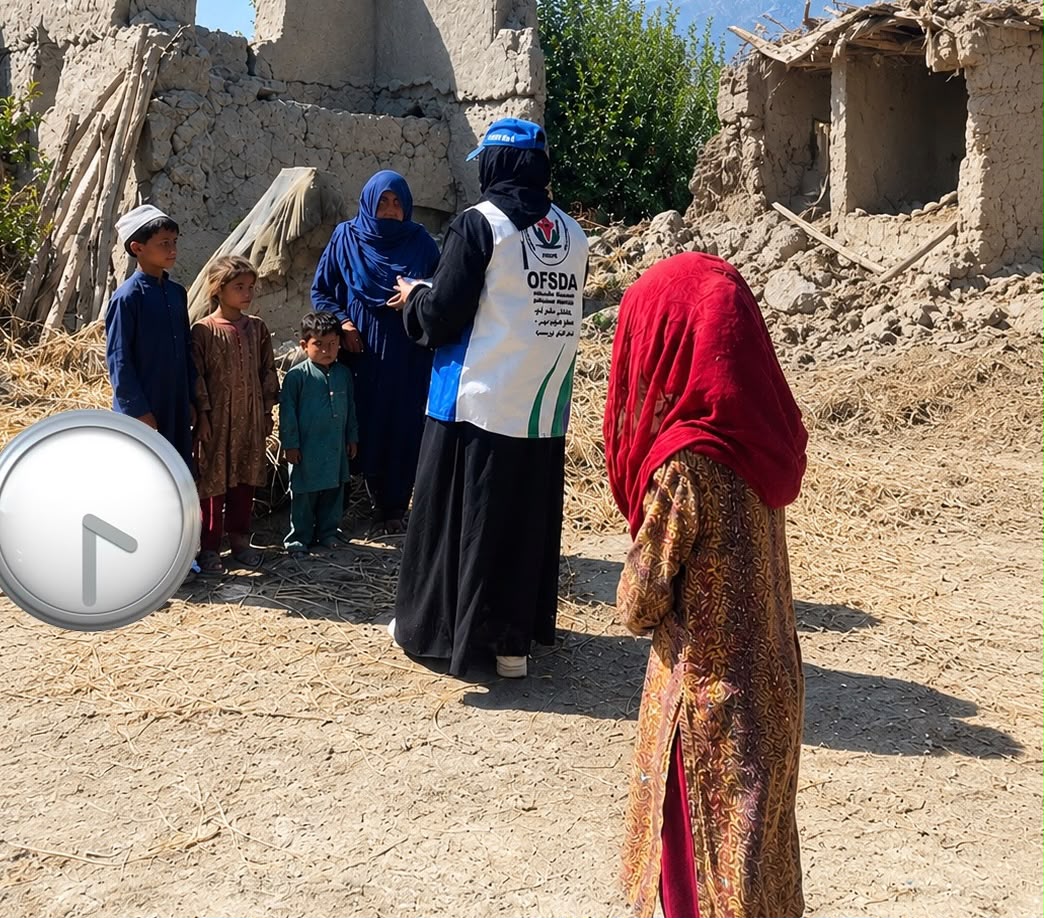
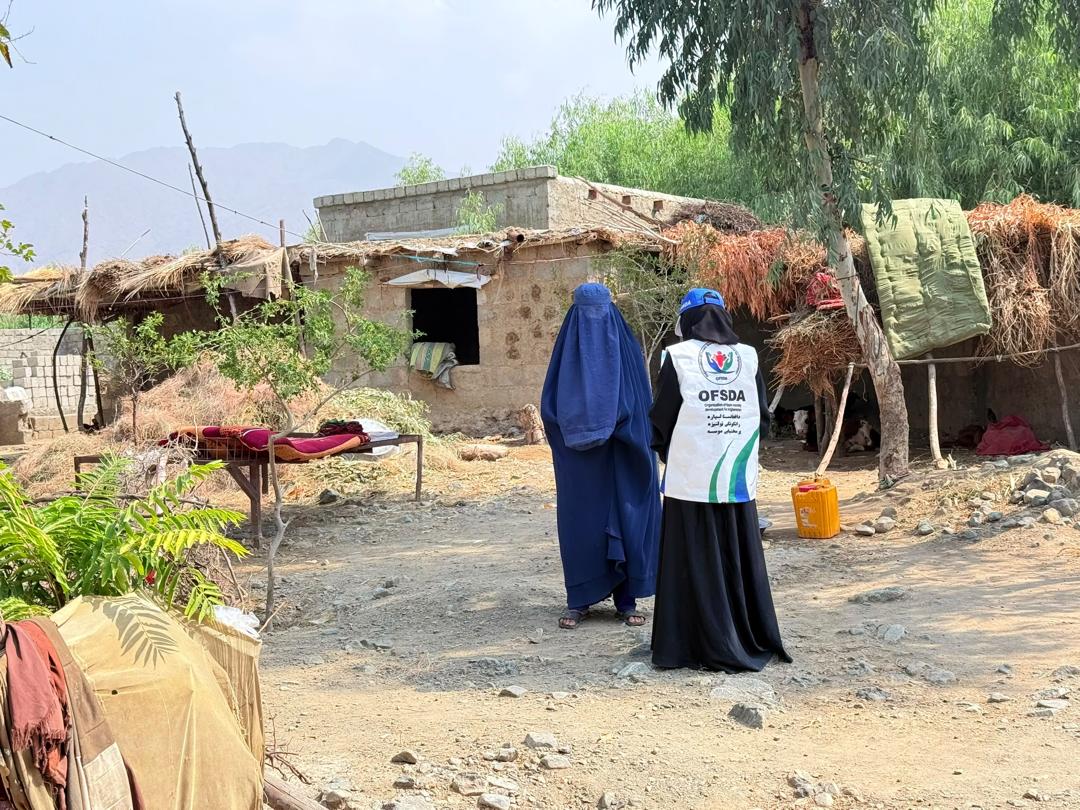
When disaster or displacement strikes, immediate life-saving aid is essential. OFSDA provides unconditional, transparent Multipurpose Cash Assistance (MPCA) to women-headed households, returnees, and IDPs, allowing families to determine their most urgent nutrition, shelter, and medical needs.
Key Interventions:
- Rapid multisectoral needs assessment (MIRA standard)
- MPCA cash transfers adhering to CVWG Cash Working Group rates
- Transparent verification and post-distribution monitoring (PDM)
- Winterization supplies and non-food item (NFI) kits
Education & Skills Development
OFSDA believes education is the cornerstone of societal advancement. In rural districts where formal school access is constrained, we establish Community-Based Education (CBE) and Accelerated Learning Programmes (ALP) for girls and young people.
Key Interventions:
- Establishing village CBE and ALP learning classes
- Education in Emergencies (EiE) and remedial learning
- Local teacher recruitment and pedagogical training
- Stationery, textbook, and classroom supply provision
Protection & Gender Inclusion
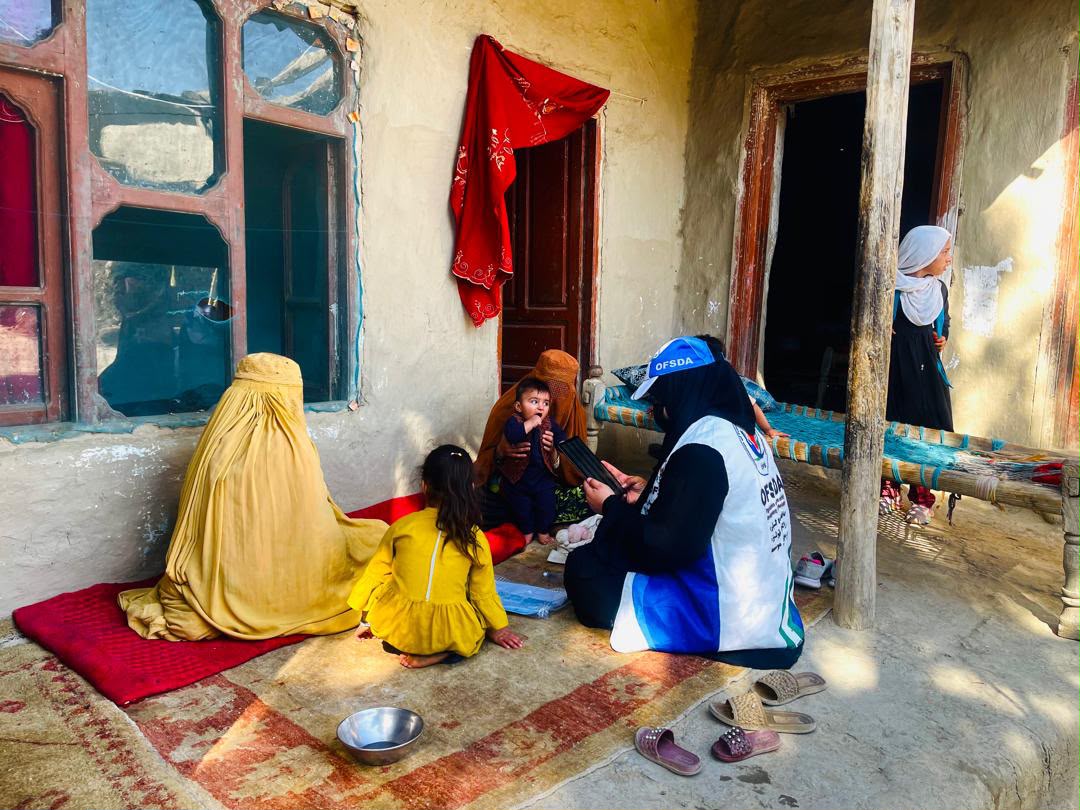
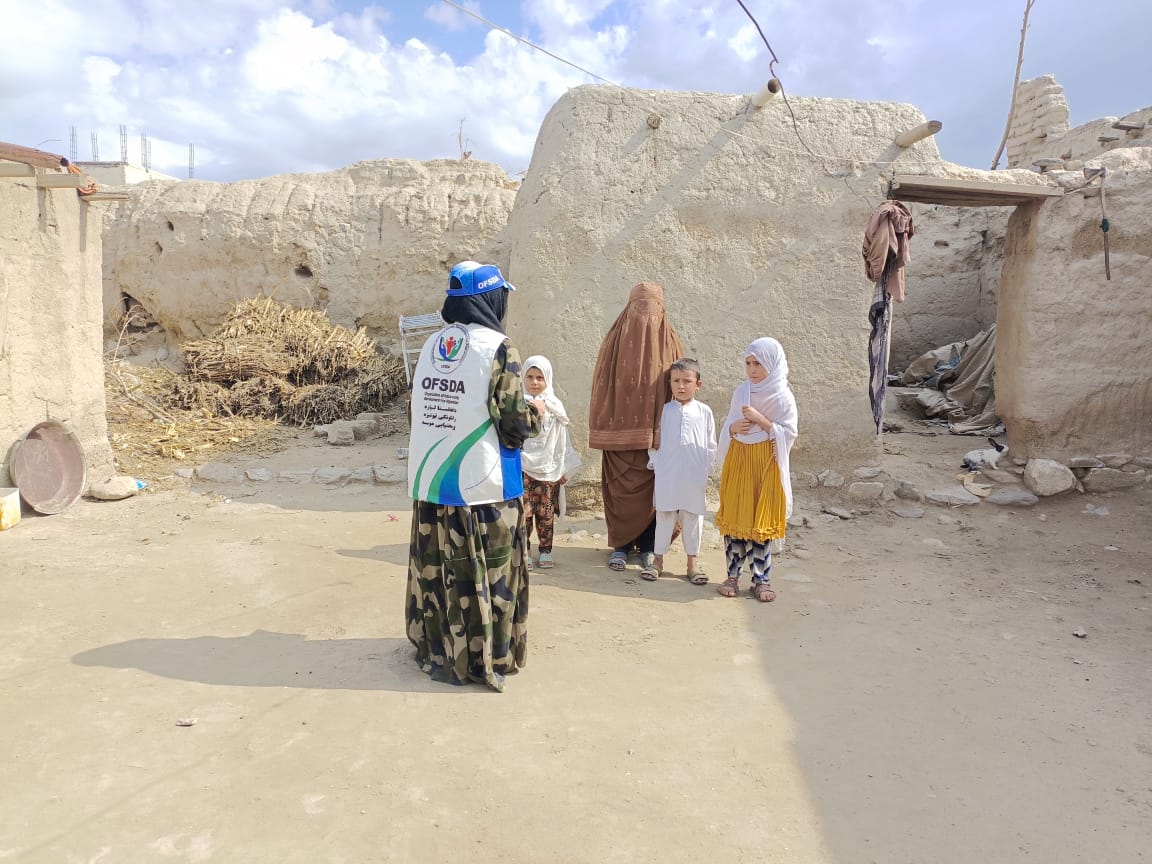
Safeguarding the safety and dignity of the most vulnerable is integral to all our programming. We provide confidential, survivor-centered GBV referrals, child protection case management, and explicit outreach to persons with disabilities (enforcing a minimum 5% to 20% quota).
Key Interventions:
- Community protection monitoring and safe referral pathways
- Dedicated disability inclusion (5%–20% participation)
- Child protection case identification and family psychosocial support
- Safe spaces and confidential community grievance desks
Water, Sanitation & Hygiene (WASH)
Access to clean, potable water and dignified sanitation saves lives. OFSDA repairs damaged community boreholes, constructs latrines, and distributes comprehensive family hygiene kits with specialized menstrual hygiene supplies in private, culturally respectful settings.
Key Interventions:
- Handpump and solar water point rehabilitation
- Household hygiene kit distribution and soap supplies
- Community water committee management training
- Water quality testing and chlorination guidance
Environment & Climate Resilience (DRR)
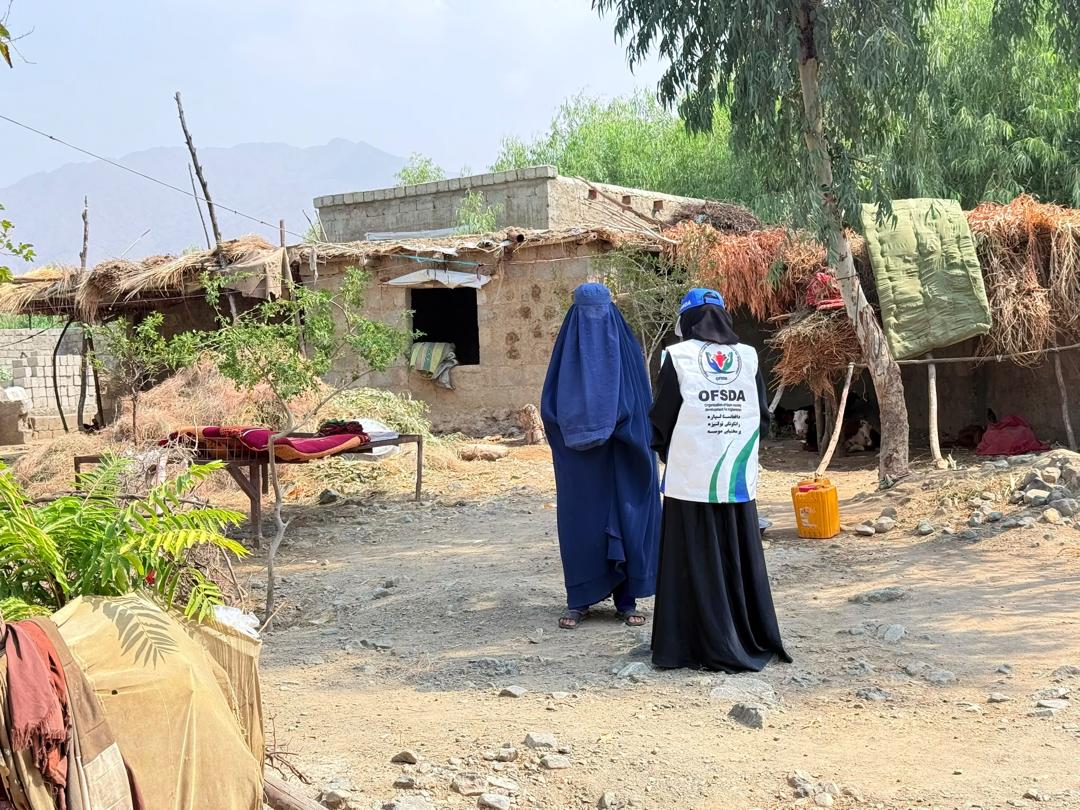
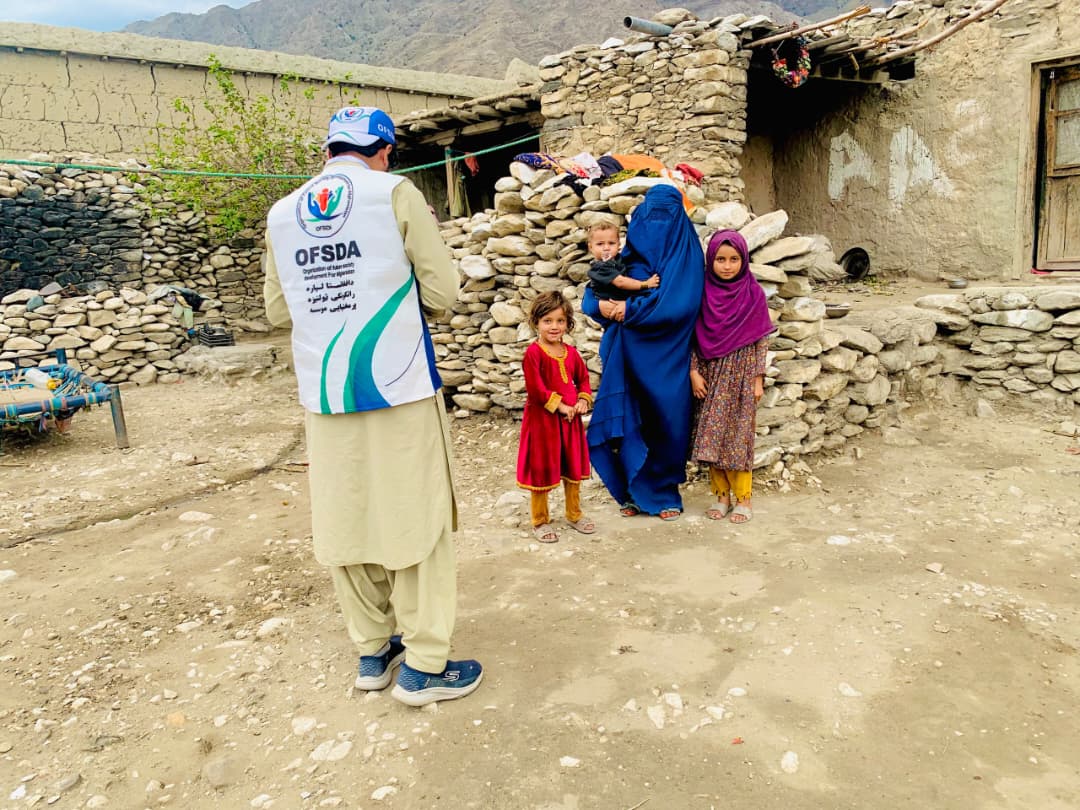
Eastern Afghanistan faces regular flash floods, drought, and earthquakes. Under our UN-Women project, OFSDA trains 50 vulnerable households across 4 community disaster risk reduction sessions, establishing early warning networks and flood-proofing strategies.
Key Interventions:
- Community-based Disaster Risk Reduction (CBDRR) courses
- Early warning alerts and evacuation route mapping
- Watershed protection, stone gabions, and soil conservation
- Climate-smart kitchen gardening and water conservation